Joy in sharing a life in pictures
Michael Gollin
July 2014

4MAG photo scans5

1974-78_College_0006-21985_0025P1040054
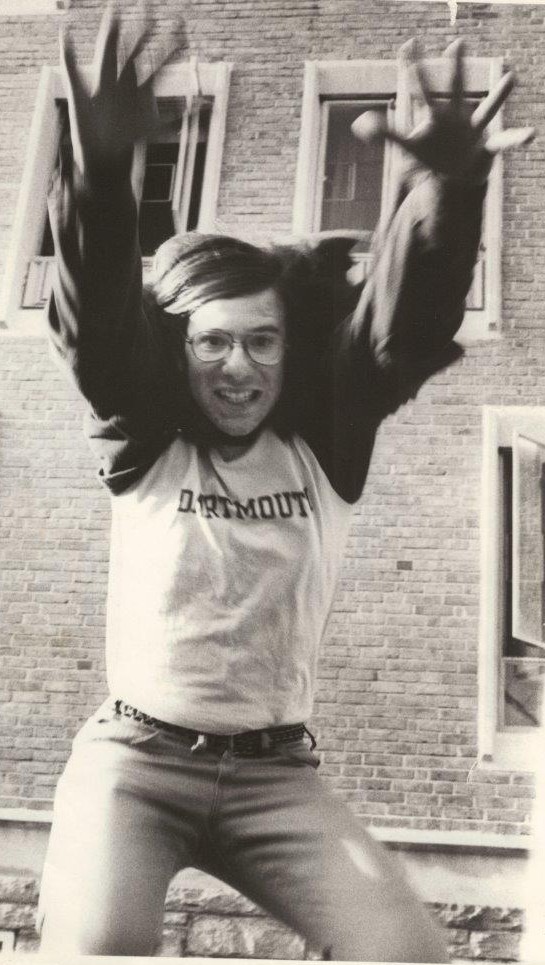
My family put together a half century of family photos into a photographic autobiography for my 57th birthday party. This may be the last year I am able to participate actively, and who knows how many more birthdays I will be able to enjoy? But I do know that these photos are important. They show me together with family and friends, at past homes and on the road, being serious or goofing around. The visual biography tells my story and conveys a powerful and enduring message of a life well-lived and well-loved. If a picture is worth a thousand words, then a collection of seven hundred slides shown at four seconds each in under an hour is worth as much as a 10 volume book.

Going through photos has always given me joy. It seems like a miracle that an image can be captured from reality and transferred to paper or a screen. What a beautiful power. We freeze a moment of time and then we relive it alone, or with others. Looking at photos, we share past memories, and create new moments and fresh insights.

But photos, like memories, can be overwhelming. We are surrounded by photos, buried in photos, and it is hard to find a path through the thousands of images each of us deals with over the years. It can become quite disconcerting to work with boxes of prints and albums and negatives and slides, and gigabytes of digital picture files. My younger children seemed intimidated by the project. Who are these people? Where is that place? When did this happen? What is going on?

But there is a way through. A selective memory contributes to happiness, and likewise, I submit, being selective with photos is the key to enjoying them.

Photos themselves are inherently selective. The photographer chooses the moment, the subject, the angle, and the frame of the image. This act distills reality to an essence. But that essence may be off.

Question: How do you take a good photograph?
Answer: Take 100 bad ones.

Getting rid of the bad ones is the first step.

The best and simplest system to organize photos for selection is chronology. Ordering images by time gives a narrative context to the seeming chaos of life. This happened, then that happened. Name all digital folders and photos and albums with the year first, then month and whatever description you want (for example, 1999-12 millennium party).

The other way to select photos is by subject. When the subject is a person, the act of photography itself is a highly social act. As Susan Sontag put it in her 1979 book On Photography, ”To take a photograph is to participate in another person’s mortality, vulnerability, mutability. Precisely by slicing out this moment and freezing it, all photographs testify to time’s relentless melt.” The desire to slow time’s relentless melt explains the insatiable modern urge to take endless snapshots and selfies and to post them in an effort to achieve not just celebrity, but immortality.

I’ve always loved photos. For me, as a little boy, photos were fun, and an occasion for family togetherness and action. My dad was a good amateur photographer and took countless Kodachrome slides that infused our early years with vibrant colors. Our 1962-1963 sabbatical trip to Europe was chronicled like a presidency.

Later, I caught the Rochester imaging bug. I got a Super 8 movie camera for my 13th birthday and began filming our 1970 summer trip to northern Europe, without much of an idea how everything would look. You had to load the film, shoot it unload it, package it up, mail it off to Kodak, wait for it to come back developed, then load it onto a projector and show it. The whole thing was magical. I was famous for capturing a candid shot of a Dutch boy picking his nose. In 1971, the Mashpee mob I hung out with all summer filmed a silent movie, called Keep the Faith, about WWI soldiers and nurses. It was the height of campiness. Off-screen, the drama included my camera falling out of a boat into Santuit Pond. The camera was ruined but the film came out ok, with a stylish graininess we attributed to the green algae in the water. Other films remain boxed, waiting for transfer to modern digital technology to release their time capsule images.

In high school, my dad gave me his Kodak SLR. I took a photography class junior year (1972) and learned how to spool negatives into film cans, focus, measure light levels, bracket shots with different exposures, develop the negatives in the dark, print contact sheets, and make test strips and final prints under red light. The vinegar smell of acetic acid fixer was addictive, and the magical alchemy of silver turning from white to black never ceased to amaze me. I enjoyed the assignment of assembling, mounting, and presenting a portfolio of different types of photos. It was fun taking portraits of my friends, and being a subject for their shots. Taking photos gave purpose to my wanderings around my neighborhood, and out into Monroe County. My favorite photo was of a broken down shack on the Erie Canal. It showed clouds through a hole in the roof, and reeds and waves through a hole in the wall, and it won a county-wide photography award. I guess I was developing a good eye.

In college I dabbled with photos, and found myself the president of the Princeton Photography Club. As the only member, I had a key to a darkroom with all the necessary chemicals and equipment for black and white work, and no competition, but no camaraderie, either. I took Bunnel’s course on photography as art, and learned by looking and listening what makes a good photo good, and what makes a great one great. It’s a combination of framing, timing, subject, lighting, and technique (focus, exposure, film and paper, etc.).

I forget what happened to the Kodak SLR, maybe it broke, but when I got to Zurich, Switzerland for grad school in 1978, I found a beautiful used Olympus SLR kit, very light, with a wide-angle and normal 50mm lens. The guy selling it gave me a great deal. It became a constant companion, and I saw much of Europe through its lens. I mainly shot color slides, because they were cheap, and I could shoot a lot and only print a few. Meanwhile, I used the university laboratory to develop and print scientific images like microscope photos of fruit fly muscles, and also an occasional personal roll of black and white film, like in 1980 when I met Prince Charles over tea during his visit to the ETH.

Looking at my Swiss photos now, some are nice, but many are mediocre tourist shots of scenes I came across in my travels. Most are not technically sharp in the way we are accustomed to in the age of automated digital cameras. But there are some beauties. And the ones that hold the most significance are the ones of friends and people I met. My daughter Natasha has a fine eye for architecture and landscape, and takes zillions of well-composed attractive photos that she posts on Facebook. She has a skill I never fully developed. But as I age, I am drawn more to faces. I also like little things, like flowers and bugs, which I shoot with what I call macro-mania.

I was a gleeful photographer during my bachelor years, judging by the number of rolls I shot and the happy subjects. I see how co-workers became friends as we did things together outside of work: parties, sporting events, hanging out. I see how one girlfriend became my wife, and all the others became ex-girlfriends (whose images are not nearly as awkward to see now as way back then).

When Jill and I were married, the traditional festivities included generating an album of photos showing all the family and wedding party organized in our classic subgroupings of bride, groom, parents, bridesmaids, groomsmen, flower girls, ring bearer, etc. In hindsight, wedding albums set the stage for parental obsession with snapping a picture of the new baby’s every act and outfit.

Scan 1417600401999_08_CapeCodWithKids_02 (3)P1030079

We were no exception, and we filled baby albums, while also running video at every occasion. What could be more worthy of preserving for posterity than our three perfect babies? Consistent with the relentless logic of birth order, Natasha was chronicled most, Max less, and Julia least because of the constant need for us to play a 2-on-3 zone defense. Sorry, Julia, for the fewer photos and incomplete albums during your early years. I was lax as a photographer for a few years until we entered the digital age about 2004.

For the past decade, I’ve been shooting digital photos. The really bad photos are deleted in the camera, and it is easy to copy and send them around. They are secured on SD cards, and most are on my computer and backup drive (although I lost some phone pictures along the way). The cameras were fragile and didn’t last long, but I like my waterproof shockproof Panasonic Lumix. It is fantastic to be able to jump in the Pacific at the Galapagos and take photos and videos of sea lions cavorting with us.

For our older daughter’s high school graduation in 2009, then our son’s, we collected photos from infancy through teenage years and posted them on boards and ran slide shows. And now it is my turn.
Many of the photos with me in them were taken with my camera on a timer, or by my companion or an anonymous passerby, and many were sent by family and friends. I appear in about 1 in 20 pictures, which ends up being a manageable number.

Assembling a life in pictures requires a lot of work: Finding, ordering, and selecting prints, and then scanning them to digital; sorting and copying and relabeling and dating digital photos; and arranging them for a slide show or web-presentation. As time-consuming as that may be, it is much simpler and easier than trying to go through old journals, correspondence, folders, and other written records to convey the quality of life I have enjoyed with my fun and loving community of family and friends.

I hope that looking at my photobiography will bring strength and smiles to family, friends, and others. Despite my current troubles, there should be nothing but joy in the big picture.

P1030067

***

Joy in Sharing a Life in Pictures

Bostonia profile

Boston University’s Bostonia magazine featured a nice profile about me, and some of my activities during law school and the past 30 years since I graduated.

http://www.bu.edu/bostonia/summer14/a-crusade-for-public-interest-law-and-against-als/

(I note that some people, myself included, may be sensitive to the use of the word “crusade” in the title.)

I’m happy with the theme that it is good to be creative and to help others.

Honey

Honey
September 2013
Michael Gollin

 
I awoke this morning to the smell of honey. What a good beginning. Sweet vapors lingered from boiling teglach, dough balls in syrup, our family tradition for the new year.

Crunchy candy coating with almonds, sesame, and dates, and a glass of milk; and for dessert, a slice of newly picked golden apple dipped in Santa Fe honey made by brother’s bees.

Everything is possible with food like that to enjoy.

***

Banishing Falstaff


Falstaff

Banishing Falstaff
Michael Gollin
May 2014


–from Henry IV, Part 2, Act V, Scene 5:

Falstaff. God save thy Grace, King Hal; my royal Hal!
Henry V. I know thee not, old man….
I have long dreamt of such a kind of man,
So surfeit-swell’d, so old, and so profane;
But being awak’d, I do despise my dream.

Presume not that I am the thing I was,
For God doth know, so shall the world perceive,
That I have turn’d away my former self;
So will I those that kept me company.

Till then I banish thee, on pain of death,
As I have done the rest of my misleaders,
Not to come near our person by ten mile.


As soon as trouble-making Prince Hal was crowned as young King Henry V, he coldly spurned Sir John Falstaff, his longtime compatriot, and banished the old fat knight, who expected instead a comfortable patronage position. Jolly, wicked Falstaff, witty alter-ego to the young prince sowing his wild oats, was cast away.

Watching this cruel scene the other night, I recalled seeing the play in my youth. Back then, I identified with the boisterous prince. Now, I understood the new King. I realized that in my youth, I too had my own internal Falstaff, but then gradually banished the counter-cultural “misleader” in my early 20s as I tried to become a strong young man, much like Prince Hal when he awakened from his youthful dreams to become king. Many of my friends went through a similar process. Shakespeare, meet Freud.

Freud talked about certain necessary stages of development, and in general it makes sense that we have to pass through a series of phases before we form a healthy psyche. From a modern perspective, Freud’s rigid model of oral, anal, phallic, latent, and genital stages seems downright weird. But he got the big picture right — with tension between the conscious ego and subconscious id and superego, between rational and emotional, developing with maturity until they achieve some balance. Passages, like Prince Hal’s, are at the core of more recent theories about growing up, like Erikson’s.

I read a couple of years ago that Bruce Springsteen said our lives begin like a kid in a car, and as we age, new versions of us climb in and take the wheel, but our younger selves never get out, and we drive down the road all together, more and more crowded, trying to get along with each other (and not kick each other out). It’s quite a road trip in that life-mobile. Sigmund, meet Bruce.

Born as sucking infants, we explore our bodies and the world we inhabit, with our mouths, then fingers, and all our sensations, until our consciousness emerges. I cannot remember the mind of my baby self. No one can. What crazy chaos reigns for those first few years? Most people remember nothing before four or six years old and maybe that’s for the best.

I remember my 5th birthday, with my parents and Nana, at Rochester’s Monroe County Airport. There were airplanes outside the picture windows, and sparklers in the cake. Later that summer my family went to Europe for a year and I remember astonishing amounts of detail, where we lived in England and Spain, our car, our conversations, museums and festivals.

Ages 6-12 I lived a straightforward American middle class childhood, although because it was the 1960s and my parents were both academics, I had a fair exposure to literature and art, folk music, and early hippie culture. I looked up to Pete Seeger and Woody Guthrie. When my family went to a 1970 performance of Hair, the antiwar and druggy messages were unremarkable to me as a 12-year-old, compared to the surprise of onstage nudity!

In 8th grade, I was a year young, having skipped 6th grade. Some of my precocious friends decided to get cigarette papers and roll mint tea cigarettes from tea bags. I joined them after school one day, and remember the burning feeling of the smoke, combined with the cooling effect of menthol. Smoking cigarettes was still cool back then, but we knew we were misbehaving.

During high school, I lived my wild oats years lagging behind most of my circle of friends in malfeasance. But I confess I made some bad choices along the way – after all this was the age and era of the counter-culture, of antiwar demonstrations, of sex and drugs and rock and roll. We were wild and rebelled against the system. Falstaff was among us; we were Falstaffian. Sorry, I’m not going into detail. Trespassing is one troublesome activity I will admit to. A few of my friends would scout out water towers and construction sites which we would enter and climb. We did not vandalize, or do damage. Our urge was more curiosity, freedom, and adventure than mischief.

Those were simpler times. I did my school work, worked my jobs, and graduated among the top kids in my class, and was admitted to Princeton. I was a young prince. I was doing more right than wrong, and I survived high school without causing harm to others, or lasting harm to myself. But I lacked direction or focus to match my curiosity about nature and suspicion about society.

In college, my poor study habits caught up with me. Late nights bullshitting with roommates, sometimes drinking, distracted, I missed morning classes and although I did all the work, I did less than many, with less intensity, and became used to missing the A’s I had been accustomed to. My psychic Falstaff had some fun, but I was not very happy, now that I think about it. I was repressed emotionally and immature. There were 2.5 males for each female and my few serious relationships were troubled. At graduation I learned that out of 41 seniors in my biochemical sciences department, I was the only one who didn’t apply to medical school. I recall watching a young janitor polishing the floor at the new mall, and realizing that if I didn’t find some higher purpose in my life, that might be my job, too.

Instead I found myself a doctoral research position with Ilan Deak, a rising young professor in Zurich, continuing with fruit fly research I did for my senior thesis. I had a blast in Switzerland while it lasted. Officially I had a half stipend, meaning in my calculation I owed the lab 22 hours a week. (Full time for hard-working Swiss was 44 hours.) I worked more than that, but I had plenty of time for beer halls, socializing, traveling the Alps, to Italy, Yugoslavia, and playing up being the cool American – spinning records as a DJ at the International Students Club, picking up girls, and being picked up. I felt like a young prince again, on the town.

About one year in, my professor died after ingesting a neurotoxin we had in the lab. The insurance company kindly called it an accident but we all knew it was suicide. Later I understood he had major depression, but back then it was incomprehensible to me, traumatic. A life with such great potential, cut short. I had to grow up fast and make some adult decisions. I decided to stay, for a while, and was taken in by another lab, under another professor. That lasted two years.

Meanwhile, I was gradually absorbing some of the famous Swiss work ethic. They were punctual, organized, and methodical, and used their time effectively – whether at work or play. I took up viola again, after a hiatus through college. I learned German, then Swiss German, taught English, and weighed my options. Marine biology? Enology? More and more, I searched for a path, and looked less and less for Falstaff and his gang.

The election of right-wing Ronald Reagan in 1980 shocked my liberal conscience and led me back to the US. My political interests, facility at learning languages, love of discussion and debate about science and everything else, and a recognition of my blind side in writing and history, all combined in the decision to apply to law school. And so I arranged to complete my Master’s degree, and returned, the wrong way, via Moscow and the Trans-Siberian Express, to Tokyo, a full moon climb of Mt. Fuji, and back to Boston University for law school in 1981.

Law school was serious work, and by that time, like Prince Hal/King Henry, I had effectively banished Falstaff. The role of a lawyer, the responsibilities, I took them seriously. I had developed focus, intensity, drive. Of course, being a young man in New York in the mid1990s, I had plenty of fun. But I worked hard, rose in my profession, and maintained my first long-term relationship, followed by meeting my lovely wife, with whom I’ve been for 28 years – half my life. I settled in to my career path, and sought to balance paid work, public service, play, and raising my three wonderful children.

So, could Falstaff ever truly be banished? No. Shakespeare had King Henry promise a healthy stipend to the free-wheeling knight, and later, he revived Falstaff, the character, reputedly at Queen Elizabeth’s request, in The Merry Wives of Windsor. Falstaff remains one of the most popular characters in drama, and his type permeates modern entertainment (think The Hangover movies).

Likewise, my psychic Falstaff did not remain banished, just muzzled and speaking more modestly. I found a profession, patent law, where my favorite clients are inventors, innovators, restless iconoclasts pushing hard to reshape the world, rather than just trying to fit in. These people have a lot of the young prince in them, and, I guess, a touch off Falstaff. Me too, it seems, and together we have accomplished a lot of good over the years.

Even as I play the role of strict father and upright citizen, from time to time, the playful, rebellious side of me will surface — for amusement, or to cope with life’s absurdity and trouble by cunning ploys. I try to use my past to teach cautionary tales to my children, about taking calculated risks and learning from my mistakes. And of course I still get into trouble – just not too often.

Coming back to Springsteen’s life-as-roadtrip metaphor:

Now, the most recent me (the one with the unfortunate progressive illness) has taken the wheel of my life-mobile, and I’m looking around at all the younger (and healthier) me’s riding along. I’m teaching myself lessons about how to enjoy this phase. I enjoy tweaking people if they get too serious. I rely on my wits to rebel against the unpleasantness that confronts me, and I see that being sick offers new freedoms from social expectations – a chance to act out, a bit like Falstaff.

Not that this is good compensation for losing my hard-won independence bit by bit. But I do find widening circles of people who are happy to help, and to join with me as I find new ways to play the game of life.

Sure, life is not all fun and pranks, and growing up means somehow banishing Falstaff from our regular circle. But I’m glad he’s still around, not too far away, when we need him.

***

Crossing the Delaware

crossing the Delaware

Crossing the Delaware
May 2014
Michael Gollin

 
A good man, John O’Brien, died of ALS a month after I met him. He was kind and strong and generous. His wife said his disease was like a runaway train, and they were struggling to keep ahead of it. John gave me my first cane, because he had progressed to a wheelchair already. He said, in a formally gentle way, “If you’re willing to accept it, I would be honored to give you my cane. I hope you use it well.” I now switch between three canes but John’s holds special significance. It helps me keep going.

For me, ALS does not feel like a runaway train. It progresses more like a hostile army, marching relentlessly forward, and we have to keep moving to stay ahead of it. What choices do we face when confronted with overwhelming force? Surrender? Fight a losing battle? Those are not good options. The answer came to me last week at the annual ALS Association conference and advocacy day on Capitol Hill, where I felt like part of an army with canes and wheelchairs, together with our caregivers. The best that ALS patients and our families can do is to act as soldiers in orderly retreat, pulling back slowly, strategically, skirmishing, holding together, waiting for our opportunity to go on the offensive, like Washington’s Continental army crossing the Delaware.

In August 1776, the Continental Army was stationed in New York, when the British invaded with a superior army and overran the city. Washington and his generals realized they could not hold, and so they fell back through New Jersey all the way to Valley Forge, living through “the times that try men’s souls.” Then, the day after Christmas, by crossing the icy Delaware River, they surprised the British troops stationed in Trenton and began to advance back through New Jersey. Although the revolutionaries never recaptured New York by force, they reversed the enemy’s momentum and went on to win the war.

So we people with ALS go on, accepting no shame in an orderly retreat because that is the only good option, while we scout for opportunities to strike back and retake our territory. What do those opportunities look like? For me, it means volunteering for clinical trials for new drugs and treatments like stem cell therapy, and working on ways to accelerate scientific research in neurology.

I’ve participated in three clinical trials, and completed two. One did not succeed, and the other is ongoing. One, the Neuralstem trial, involved very invasive prolonged surgery to implant neural stem cells directly into the spinal cord, and immunosuppression drugs for life. The risks were high and frightening. But early results showed promise. I thought long and hard, and took lots of advice. I consulted with several people who had been through it. They all said that whatever I decided would be the right choice. As I studied the details, it seemed more and more like a space launch. I dubbed the volunteers “ALStronauts.”

My brother described three brains involved in my decision. The primitive lizard brain, concerned with survival, is scared of risk but eager for a cure. The angel brain is willing to sacrifice to benefit others. The Buddha brain can accept whatever happens with equanimity. I decided to volunteer, following the lizard brain, competitive, going on the offensive, in hopes it would help me, and others. I knew that pushing hard would bring hope to me and all who care about me. I also realized if it went bad, I could always turn back to the Buddha brain.

I went through five days of rigorous testing in Boston, blood work, hours in MRI machines, strength and breathing tests (upright and supine), and physical examinations. Ultimately I passed all but one test. Supine breathing had to be at least 50% of normal, and though it barely reached that in one out of my many tries in January, my surgery wouldn’t be until March, and my breathing was declining slowly but steadily. The doctors considered requesting a waiver of the 50% requirement, but they told me that my weak breathing raised safety concerns. The alternate candidates had stronger breathing. So my angel brain led me to withdraw gracefully from the trial, happy that some other deserving person would take my spot. That surgery went ahead and I hope it was a big success for the brave volunteer.

I guess I’m like the soldiers left behind to guard Valley Forge while Washington led the force across the river. They couldn’t all go into battle, but they were all in it together.

Meanwhile, like it or not, I remain on active duty in an army of 30,000 people in the US, a half million worldwide, with ALS.  Multiply those numbers by our spouses, children, parents, cousins, friends, and you have millions. We advance, backwards, scouting out healthy practices and alternative therapies to keep us going longer. We adopt new practices and technologies to aide with respiration, nutrition, speech, and mobility. We accept help and we help others. We deepen bonds with family, friends, colleagues, and comrades in arms. We soldier on, so that when the time comes — and we know it will — we will be ready to cross our Delaware, in force, holding high the flag of life, health, and hope for a cure.

***

Soul Makossa

Soul Makossa
Michael Gollin
April 2014

Working at my computer, listening to my Fela Kuti station on Pandora, a song stopped me in my tracks. It was Soul Makossa by Lafayette Afro-Rock Band, and the song rang bells loud and clear. The lyric goes “ma ma ko ma ma sa mako makossa” and it has an addictive brass and guitar refrain. So I consulted my Oracles (Google and Wikipedia) and found a fascinating back story on one of the biggest recording hits in history.

Kossa means dance in Cameroon’s Duala language, and makossa (I dance) was a popular style, Soul Makossa was recorded there in 1972 by saxophone player/songwriter Manu Dibango. It was picked up in New York and became the first disco hit, says Wikipedia, with nine or more versions on the Billboard charts at the same time. A decade later Michael Jackson ensured its immortality when he sampled it in Wanna Be Startin Something on “Thriller”. You know – for the last minute or so, the backup singers go “ma ma say ma ma sa ma makossa.”  The two songs are compared here . It’s been sampled endlessly over the years.

I remember people playing the Thriller album all over New York City my 1st summer there in 1983, before my last year of law school – in Williamsburg, Brooklyn where I shared an apartment in May and June; in Greenwich Village where I shared an NYU dorm room for the rest of the summer; downtown; uptown; everywhere. And people danced to that music – the new thing was break dancing on the street with a boom box, and mobs crowded Studio 54 and the other discos. Thriller was the summer’s definitive soundtrack. I bought the (vinyl) album at the brand new flagship Tower Records store around the corner from my NYU dorm.

It didn’t bother me at all that I didn’t understand the makossa lyrics. They sounded good, and they made visceral sense as part of the place and time. And I liked the dancing. (I even learned to do a lame moonwalk – I wasn’t very talented.) I was getting into world music at the same time – I still prize some African music records I bought at Tower, and the skeptical looks of my friends when they saw them, and asked what the lyrics meant (I didn’t much care). And so it seems, by continuing to listen to African music three decades later I solved a mystery and came full circle.

And beyond — my public interest intellectual property concerns made me ask whether Jackson or anyone else paid royalties to Dibango? Did Dibango get rewarded for his creation or was Cameroon a victim of piracy in the US? In 1983 I was working at a patent/trademark/copyright law firm, but we never wondered about these issues until the 1990s when intellectual property became part of global politics.

So, the answer: According to Afropop, Jackson never asked Dibango for permission to use Soul Makossa. Dibango sued Jackson in Paris in 1986, and received 1 million francs (~$150,000) in settlement. In 2009 Dibango sued Rihanna in Paris for Don’t Stop the Music, which has heavy sampling of Jackson’s sampling of Soul Makossa, but reportedly she won, based on having received permission from Jackson. Dibango has nonetheless made a long career from his music since the 1950s, becoming head of the Cameroon Music Corporation, and in 2004 being named a UNESCO Artist for Peace. So I guess it’s ok to freely enjoy whichever makossa version you like best. Just don’t forget to dance.

***

Aphorisms to Live By

Aphorisms to Live By
Michael Gollin
April 1, 2013

You can quote me:

The purpose of life is to prepare yourself for whatever life may bring your way, and to help others do so, too. If you keep yourself ready to enjoy the good and to cope with the bad, you are leading a purposeful life.

The meaning of life is found by asking, “What is the meaning of life?”

Do more good, less harm. There are no absolutes, but this relativism is enough for living a good life.

The only two things we can control are our relationships with other people and our skills based on experience.

Be patient when things are getting better or can’t be changed, but be impatient when they’re getting worse and they can be changed.

Adapted from other wise people:

Where is it written that life would be easy?

Luck is the intersection of preparedness and opportunity. Luck favors the prepared mind.

Prepare for the worst, hope for the best.

Shared joys are doubled and shared sorrows are halved.

According to the Book of Job, Nature and Fate (God) bring pleasure and pain unpredictably, and the art of living is to accept that we will get one after the other. Who are we to question which we get?
(But we should not accept cruelty or malfeasance by other people.)

Appearances are often different from reality.

Michael Gollin Autobiography

(I wrote my autobiography in under 500 words during two days in March 2014.)

I am a patent attorney at Venable LLP in Washington, DC, striving to help creative people put their ideas to work to benefit society, through private and public effort. Born into a loving academic family in Rochester, NY in 1957, my first job was as a newspaper boy and I initiated an externship program in my high school. Pursuing a curiosity about the wonders of nature cultivated during summers on Cape Cod, I studied biochemistry at Princeton, graduating in 1978, and then received a master’s degree in biology from the University of Zurich in 1981, conducting research on fruit fly muscles and traveling extensively.

Turning toward the integration of science and society, I entered Boston University School of Law and graduated in 1984. There, I co-founded the Public Interest Project to support law students working in public interest summer jobs; 30 years later it remains a vital student program. In my first law firm job in NY, I convinced the Kenyon & Kenyon partnership to establish a pro bono program so I could take a prisoner’s civil rights case. My next firm, Sive, Paget & Riesel, was well known for environmental activism. I settled in Bowie, Maryland in 1990 with my wife, Jill Dickey, and together we have raised three talented children.

I joined Venable in 1998, where I established the Life Sciences practice group and Venable Venture Services. I was able to build a broad practice representing pharmaceutical, biotechnology, and medical device companies, as well as environmental and space technology companies, and leading research institutions including UCLA and Princeton. In addition to obtaining thousands of patents, I have lobbied on patent reform and participated in proceedings before the US Supreme Court and the Federal Circuit Court of Appeals. I am proud to have maintained continuous client relationships for over 25 years.

My pro bono work took me to Belize, Fiji, Kenya, and Tanzania, and led me to found PIIPA (Public Interest Intellectual Property Advisors) in 2002, to expand such service to a global network of IP professionals. I created a course in intellectual property management at Georgetown’s business school in 2001 and adapted it for the Franklin Pierce law school, now University of New Hampshire. I authored the 2008 book Driving Innovation: Intellectual Property Strategies for a Dynamic World to advance global literacy about intellectual property as an engine of innovation in all creative sectors, and I have published numerous law review and other articles and made countless presentations around the world. I have been fortunate to receive many honors, including recognition for contributions to the 2007 Nobel Peace Prize. Since I was diagnosed with ALS, a motor neuron disease, in 2012, I have been working pro bono with the ALS Association and MDA to accelerate the search for therapies for this incurable disease. I also launched the creative writing blog, http://www.Innovationlifelove.org. For more information, see my Venable bio.

New Year, New Day

New Year, New Day
Goodloe Memorial Unitarian Universalist Congregation
Michael Gollin
January 5, 2014

Today is a good day! That is my morning mantra. Some days it’s easy to say, and I become euphoric and grateful simply by raising the blinds and watching the spectacle of sunlight shining on the world. The simple act of blessing each new day helps me channel my spiritual power to overcome even my deepest worries and negative emotions as I face sickness and trouble. How could I remain upset when I see each day as a magical present, given to me by forces beyond my control or understanding?

Every day is my birthday, and I can unwrap this miraculous gift again and again. Sure, today will surely include some disappointments, like when the presents we get for our birthday and Christmas or Hannukah don’t live up to our highest hopes, but there are few joys that compare to receiving and accepting a present, and I can’t imagine any better present, or anything more precious than another day of life.

Many years ago, a colleague’s wife died in her 30s from cancer. At her funeral, the rabbi said something that went straight to my heart, where I’ve kept it ever since. He said: “Our days on earth are numbered, and whether the number is large or small is not so important as how we live each one.” His words were like a message from a distant society. At the time I felt immortal, with a new wife, a new home, a new baby, and so many decades ahead of me that it seemed like infinity. I mostly disregarded the spiritual spark within and hustled and bustled, busy building a life for me, my wife and kids, and working hard in my chosen career as a patent attorney.

So here I am, two decades later, a confirmed agnostic who never belonged to any congregation before Goodloe, leading a religious service. I am grateful for the opportunity, and I can now appreciate the hard work that goes into a service.

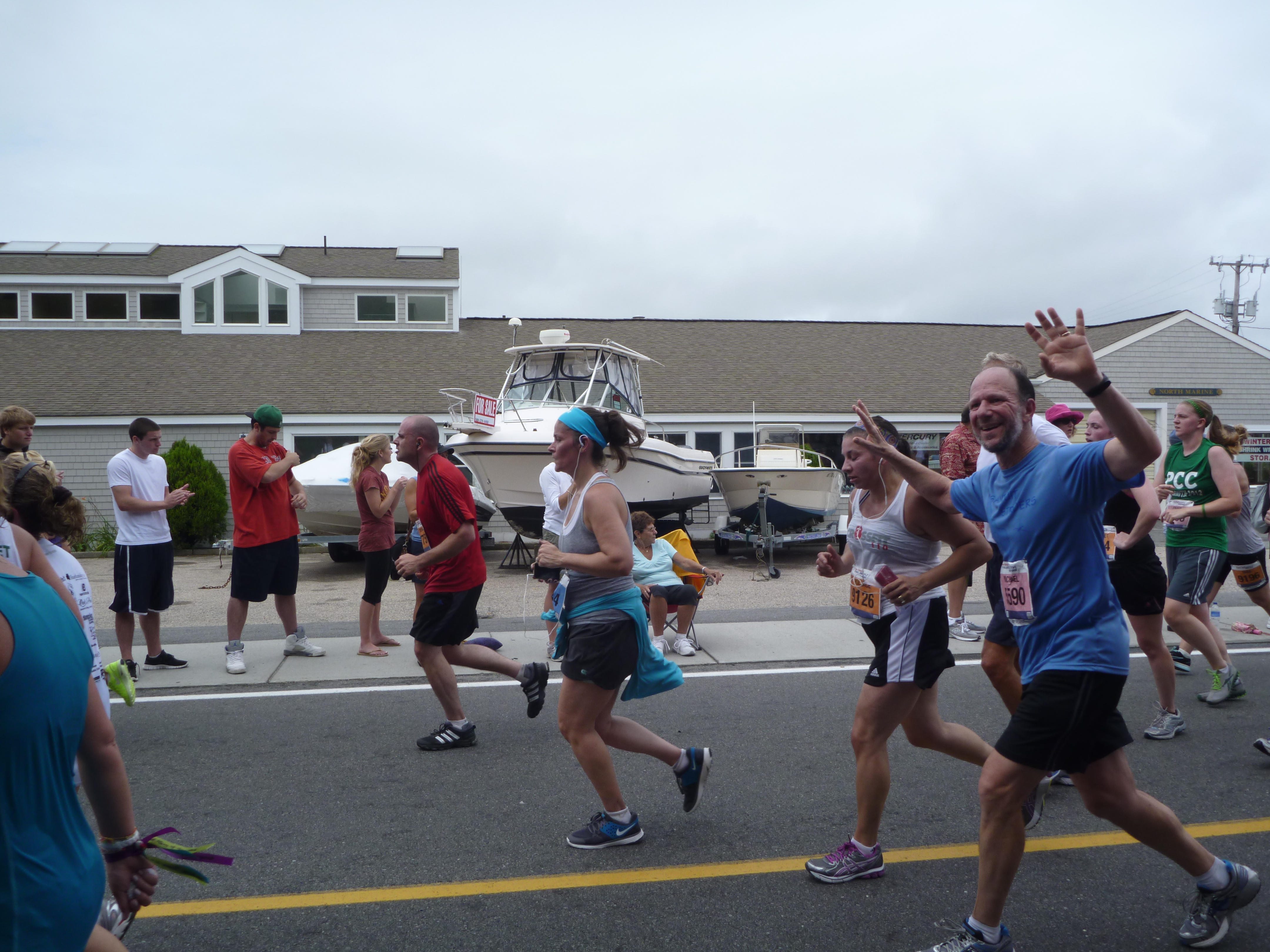
Things changed in August 2012. I knew something was wrong when I finished a running race much slower than I expected, and was suffering weakness in my hand. I spent about a month with a series of doctors and in October my neurologist confirmed my deepest fear, with the devastating diagnosis of ALS, or Lou Gehrig’s disease. This motor neuron disease causes progressive muscle loss, has no cure, and is terminal. That knowledge forced me to turn a corner onto a dark and scary road through a neighborhood we all try to avoid for as long as we can. And at first I felt like I was walking alone. But very soon, I found myself being led by guiding insights that emanated from my spiritual core, a resource I’ve nurtured here with you. Three of these insights relate to the year, the day, and the moment.

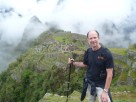
First, years — I asked myself a difficult question that fall: What would you do if you had a year to walk, and two years to live? The answer came in a flash: I would walk for a year, and live for two. Elaborating the details to that simplistic response has led me to experience 2013 as the happiest of years spent with family and close friends, at home, at work, and trekking to some of our planet’s most amazing places, fulfilling shared dreams of adventure. I had an instant entourage of family and friends as I hiked the Inca trail to Machu Picchu, followed Darwin’s footsteps in the Galapagos, visited my ancestors’ home towns in Eastern Europe, and went on safari in South Africa. We are all grateful for these experiences together. We will have a good time even when my wandering days are over and I am stuck closer to home. So I don’t worry about how many years I have left. I concentrate on making life a wonderful journey all the way. Wherever the road leads this year, I will enjoy the journey.

Second, days — The morning after my diagnosis, I woke up to a beautiful autumn day and felt pure ecstasy just to be alive. I put on my running shoes and off I went down the trail. I experienced transcendent joy – and even though I broke down sobbing with grief after a half mile, I kept going. Soon I made a vow to have such experiences every day, and somehow I conditioned myself to expect a continuous flow of magic moments. Why wouldn’t I wake up happy?

Third, moments – As soon as I received my confirmed diagnosis, I realized how hard it would be for my family to hear what I had just heard and so I came up with a way to soften the blow. I told them that I had good news and bad news, the good news being that I am very good at self-diagnosis. They knew immediately what the bad news meant and that is how we began to live in the new world, together. In dozens and hundreds of encounters since then, I have dropped my grief bomb on relatives, friends, and colleagues and shared every kind of reaction, from shock, to grief, to disbelief, with some people comforting me, and others requiring me to reassure and comfort them. All this loving, sharing, and empathy forged a growing and deepening bond with many people. Even at my law firm, a formal workplace, soon I found myself surrounded by all the hugs I can handle. People tell me it’s inspiring to see how I find silver linings among the storm clouds. I think what they mean is that I give them some confidence that they too will be able to handle the challenge well when it is their turn to follow me.

So those were some guiding insights. Now let’s take a time travel trip together to further understand the Mantra of Today.

Billions of years ago, there were no days, or years. Matter and energy were still new, and I get confused about when time began, or even what it is, but for our purposes let’s just recognize that eventually our spinning Earth began orbiting around the Sun, and that’s when years and days began in the way that we can all understand. And for billions of years to come, it’s a safe bet that there will be day after day.

Millions of years ago, vast ecosystems of life had formed in every sea and on every land mass. Sunrise and sunset in the Jurassic period were about the same as now. The profusion and variability of microbes, plants, and animals was unstoppable, despite mass extinctions now and then – and humans rose up on their hind legs and began running around in social groups that could outwit even the baddest of predators and prey. Like us, and the rest of their neighbor species, they awoke each day and went about their business.

Tens of thousands of years ago, as agriculture began, chiefs and Pharaohs and ancient priests began to organize the solar year into lunar months and set aside certain days as sacred.

Over the centuries, countless societies continued to rise and fall. Thousands then millions and billions of babies were born on their birthdays, grew up in happiness, or misery, and lived each day as best they could until the day they died. Even in war or disaster, survivors woke up each day and found the will to go on.

My own family history began about 150 years ago, when Russia required Jews to select a family name, and the records from then on allowed me to find where they lived, their birth year and who made it safely to America and when. Like us, every family begins to celebrate its own special holidays, with anniversaries, and dates of birth and death. But in my view, we should respect our family heritage, our ancestors and societies and the whole brilliant bundle of everything in our past, present and future, every single day.

So the years and seasons come and go, and the months and weeks form nice and convenient cycles of days. It’s great if we can celebrate the Sabbath, birthdays, anniversaries, and national holidays. But why stop there? Why not celebrate our family heritage, our societies and the whole brilliant bundle of everything in our past, present and future, every single morning?

And is it enough to greet each morning with joy? A family friend told me her story of surviving the Holocaust by leaving Lithuania days before the Nazis arrived. Every night since then, she gives thanks for the day she had just been fortunate enough to experience. So I added that to my mantra: in the morning, I say today is a good day. At night, I recall some positive events – hopefully I shared some love and made the world a bit better somehow — and then I say that was a great day, thank you. And this evening mantra made me even prouder of my spiritual achievements.

But wait, there’s more – one morning I listened to Krista Tippet interview Buddhist monk Thich Nat Han, and it dawned on me that he strives to be fully present, grateful, and aware in every waking moment. Few of us could meet that high standard. As for me, I am pleased to be able to enjoy each day a few times – but I realize there are infinite moments in every day that I could better appreciate.
Try it now. Close your eyes for a moment and try to experience gratitude just for being alive here today.

***

With that mindset, I can explain how living every day with gratitude can help us fulfill not one or two, but all Seven Principles of Unitarian Universalism.

1st Principle: The inherent worth and dignity of every person;
The sun rises and sets for all of us, together. All people live their lives day by day, but each of us experiences our daily lives differently, with joy or sorrow, love or grief, comfort or privation. My day is neither more nor less valuable than yours.

2nd Principle: Justice, equity and compassion in human relations;
Nelson Mandela was stuck in his cell for 27 years, about 10,000 days, and he used this time to prepare for liberation from apartheid, and to cultivate compassion toward his captors while insisting that they treat him with decency, day by day.

3rd Principle: Acceptance of one another and encouragement to spiritual growth in our congregations;
Each day brings a new opportunity for spiritual growth. My membership in this congregation has helped me cultivate my spiritual garden with help and encouragement from all of you, and I hope I am returning the favor today.

4th Principle: A free and responsible search for truth and meaning;
Even if I faced physical sickness, or troubled relationships yesterday, today I can search for higher truth and deeper meaning and transform negative experiences into positive lessons.

5th Principle: The right of conscience and the use of the democratic process within our congregations and in society at large; and 6th Principle: The goal of world community with peace, liberty, and justice for all;
We are defined by the accumulation of choices we make every day. When you decide that every day is precious, you make your decisions count. You speak out and support causes that matter.

7th Principle: Respect for the interdependent web of all existence of which we are a part.
Each day of my life is also a day in the life of the trees and grass, the birds and squirrels, the ants and crickets and the flow of wind and water around me and around the world, from before recorded history began, and on until who knows when. As I savor today’s precious gift, really what I am experiencing is gratitude and responsibility for being a part of such an astoundingly beautiful and complex world.

You may also notice an analogy to another principled day by day approach. Alcoholics Anonymous urges daily recitation of the serenity prayer. My version is:
Grant me the strength to change the things I can, the patience to accept the things I can’t, and the wisdom to know which is which.
Strength, patience, and wisdom can be restored every day.

As Morrie Schwartz was quoted in Tuesdays With Morrie, if you learn how to die, you learn how to live. I have learned how to love living every day, and to paraphrase Bob Dylan, I’m too busy being born to be afraid of dying.

Life is uncertain and no one really knows what will happen and when it will end, for ourselves or those we love. But I know a few things for sure. Each of us was conceived by our mother and father, we were born, we live, and we will die. We come and then we go. The seasons return each year, as our great blue and green earth circles the sun again and again. And as our planet spins, the sun rises in the east every morning and sets in the west every evening. The world will keep going no matter what we do, long after we are gone. All we have to do is get up every morning with a smile and try to appreciate that we are along for the ride. Then we can realize that today is surely a very fine day.